Showing posts with label common app. Show all posts

Thursday, April 2, 2020

Colleges still welcoming applications for fall 2020

by Nancy Griesemer

 Penn State is still accepting applications for
 Fall 2020
In an upside-down world in which we’re learning to expect the unexpected, a number of high school seniors are second-guessing college lists they made last fall. Some want to be closer to home and some suddenly see value in considering schools with more reasonable tuitions or those with more generous scholarship opportunities.
By the end of March, the college admissions cycle would usually be winding down. But that doesn’t seem to be the case this year, as students with lots of time to reflect are thinking deeply about where they want to be next fall and under what terms.
And for students who want to explore other options, there are literally hundreds of colleges across the country ready, willing and more than happy to consider additional applications for fall 2020. It’s no secret that most enrollment models are out the window, and colleges are looking for ways to remain flexible and attract a solid class of undergrads. And by virtue of some admissions policy changes forced by the Department of Justice, students are now freer to shop than ever before.
In fact, a substantial number of wonderful schools located on stunningly beautiful campuses will consider applications from prospective undergrads well into August. And some of these schools still have scholarships to offer.
And note there are quite a few more that have extended their deadlines without publishing the fact or changing information contained on application platforms or websites. Watch your email for notifications if you happen to be on the right mailing lists or have expressed any interest in these colleges.
But don’t delay. Even those colleges with “rolling” admissions eventually fill their seats. And if you need financial support, be aware that scholarships are often allocated on a first come, first served basis or until the money runs out.
Still, if you’re looking or thinking about submitting additional applications, here are a few insider tips to jumpstart your research long before NACAC’s “space available” list comes out shortly after May 1:
  1. Common Application member institutions still open to new applicants may be found by going to the Common App website. Click on the College Search tab. Indicate that you’re looking for Fall 2020 and complete the deadline box according to your interest. If you happen to be looking for colleges with deadlines on or after March 30, 2020, you will be rewarded with a list of 563 institutions.
  2. The Universal College Application makes the search even easier. Simply go to go to this link and find colleges and universities still accepting new applications.  And as a public service, the list includes some that are not UCA members!
  3. The Coalition for Colleges has prepared a list of member college deadlines: https://www.mycoalition.help/hc/en-us/articles/115004795234-2019-2020-Coalition-College-First-Year-Application-Deadlines (if the link doesn’t work, go to the Coalition Help Center, click on MyCoalition Counselor, Applying to College and 2019-2020 Coalition College First Year Application Deadlines). Twenty-three Coalition members have deadlines on or after March 30.
  4. Using the College Board’s Big Future search engine, start by using the Type of School filter and select “4-year,” “private” and “public” (this eliminates for-profit institutions). Scan through the other filters and select your preferences for size, location, majors, etc. Click on “Close and see results.” Once results appear, go to the dropdown box labeled “Sort by:” (upper right) and click on “Application Deadline.” Caution: The list starts with “01-Jan,” goes through the calendar year. At this point, you’d want to start reviewing the colleges with early April deadlines, starting on about page 14. Schools with “no deadline” are listed at the end. It’s a little confusing, and the information is only as good as what colleges tell the College Board.
Once you have a “starter” list of schools that may still be accepting applications, verify deadlines by visiting individual websites.
But if websites are unclear or you find conflicting information as to the current status of the process, contact admissions offices directly and simply ask.
You might be surprised to find many are more than happy to hear from you!


Wednesday, March 18, 2020

No recommendations, no essays and sometimes no test scores

by Nancy Griesemer

 Central Florida requires no recommendations,
 no personal statement and no supplements.
Several years ago, the Common App announced that colleges would no longer be forced to conduct ‘holistic’ reviews of applicants to be members of the Common Application organization. On the simplest level, this was interpreted to mean that members would not have to require recommendations or untimed writing samples (essays) as part of the application process.

The change was enthusiastically greeted by colleges that never required these elements to begin with and wanted to join the Common App, as well as by those institutions that never really considered either the essays or recommendations anyway.  This was especially true of those that offered students very simple alternate applications without either element.  

And for some admissions offices, these requirements were considered unnecessary impediments to attracting large numbers of applications.  For others, the requirements didn’t seem to add much in the way of useful information, which could predict who would be most successful on their campuses.

In fact, the bottom line for everyone—highly selective and not-too-select institutions—is that grades and strength of curriculum are the most important factors in the admissions decision. The National Association for College Admission Counseling (NACAC) has consistently come to the same conclusion in their annual State of College Admission reports, as has the Independent Educational Consultants Association (IECA) in its annual survey of IECs.  This holds true even though there is an acknowledgement that grades can be manipulated, inflated and are often subjective evaluations of student performance.

With new Common App membership requirements in place, a number of colleges and universities immediately took advantage of the moment to drop requirements.  Others simply expanded their application network and joined the Common App. As a result, there are Common App members that have stripped down their application requirements to the point of no essays, no recommendations, and sometimes no test scores.

According to the 2019-20 Common App requirement grid, out of 888 Common App members, about 45% do not require personal statements—the basic Common App essay. And just under 50% require no letters of recommendation (counselor or teacher).

And taking these all together, 327 Common App members require no personal statements, no teacher recommendations, and no counselor recommendations.  Among these are
  • Arizona State University, AZ
  • Christian Brothers University, TN
  • College of Charleston, SC
  • DePaul University, IL 
  • Duquesne University, PA
  • Frostburg State University, MD
  • George Mason University, VA
  • Johnson and Wales University (NC, CO, FL, RI)
  • Kent State University, OH
  • Ohio Northern University, OH
  • Old Dominion University, VA 
  • Ole Miss—The University of Mississippi, MS
  • Ripon College, WI
  • Roanoke College, VA 
  • University of Arizona, AZ
  • University of Iowa, IA
  • University of Minnesota—Twin Cities, MN
  • University of Pittsburgh, PA
  • University of Utah, UT
  • Valparaiso University, IN
  • West Virginia University, WV
  • Westminster College (MO, PA and UT)
By the way, 196 Common App members require no personal statements, no college-specific supplements, no counselor recommendations and no teacher recommendations—seven in Virginia!

And if you cross-reference this list with the very impressive list of test-optional/test-flexible institutions maintained by FairTest, you’ll find that a few of these schools also don’t require test scores.

So what is the takeaway?  Grades absolutely rule, and transcripts considered together with high school profiles are critical elements of the college admissions process.  In fact, for a fair number of institutions, they are the only criteria used for admissions.


Thursday, March 5, 2020

Essay-optional colleges

by Nancy Griesemer

The University of Houston requires no essays
as part of its application for admission.
The Common Application recently released the seven prompts being used for the personal statement or what some consider the “college essay” for 2020-21. Not surprisingly, the prompts weren’t changed from the past several years and students can once again look forward to selecting “Topic of Your Choice” as the most engaging of the questions posed.
And various stakeholders, including high school counselors, college admissions offices, English teachers, and essay consultants could heave a sigh of relief and dust-off worksheets, brainstorming exercises and previously-successful sample essays. Yet however often we repeat the same assignment, the mystique associated with a simple essay considered a central component of the college application continues to strike fear in the hearts of rising seniors in every corner of the country and beyond. It’s only supposed to be between 250 and 650 words. And lots of college admissions folks assigned the responsibility of reading these often-tiresome documents quietly suggest that between 500 and 550 words is just fine, thank you.
Yet, parents and others continue to fret over the essay. They hire consultants and send their children to special essay-writing workshops and camps, many of which are very expensive. Some parents even stoop to writing the essay themselves or looking for someone to do it for them. And the final products are often sanitized to the point that the only obvious fingerprints might be those left by “editors” who don’t know that in the U.S. we spell it “color” and not “colour” or analyze and not “analyse.” And high school students don’t usually use the terms “whilst” or “amongst”—not often anyway.
College admissions readers tell us they can spot a parent-written or manufactured essay a mile away. The voice of a 40-something adult is usually quite distinguishable from that of an awkward adolescent, even one trying to sound a little older or more sophisticated.
But the warnings don’t always deter families from trying to control the process by offering help or enlisting the best possible help to improve the final product, including more-than-willing English teachers. And even if admissions readers aren’t always as smart as they think they are about spotting undue interference, the essays they are getting are usually quite polished and have been through a number of hands before they see them.
So what’s the solution? Some readers tell us they simply ignore the personal statement or they read it last and ascribe little to it. If that’s the case, then why assign it or even keep it in the application?
With that in mind, a significant number of Common Application member colleges have made the decision not to require the personal statement. Out of 888 colleges on the Common App for 2019-20, 398 do NOT require a personal statement. Students are offered the opportunity to include it for these colleges, but there’s no guarantee it will be read let alone considered in the final decision.
Some colleges not requiring a personal statement include:
Arizona State University
Bowling Green State University
College of Charleston
Cooper Union
DePaul University
Fairleigh Dickinson University
Florida Institute of Technology
Florida State University
George Mason University
Indiana University—Bloomington
Middle Tennessee University
New College of Florida
Ohio University
Ole Miss
Oregon State University
Penn State
Pitt
Radford University
St. John’s University (NY & MN)
University of Central Florida
University of Iowa
University of Kentucky
University of Missouri
UNC Charlotte
University of South Carolina
University of Tampa
West Virginia University
For the record, 381 Common App members don’t require “supplements” or college-specific essays. AND, 219 Common App colleges require neither a personal statement nor any essay supplements (nine in Virginia alone). Sweet—right?
And what’s the moral of this story? The personal statement may or may not be required for consideration in the application process. If you’re applying to colleges that don’t require one, you’re home free—no need for a workshop. And the personal statement may or may not be read or considered to be of much value, even by those requiring it. After all, it’s only a single piece of a larger puzzle that when complete should provide a detailed picture of the applicant—accomplishments, goals and character. You want to do a good job on it, but it’s usually not worth a whole lot of anxiety or thousands of dollars to get right. And it’s not worth compromising integrity to get perfect.
Yes, the Common App essay prompts have been released—six months in advance of August 1 (the usual start date for the Common App). But for now, they are for thinking about, not stressing over.


Wednesday, February 12, 2020

Common App essay prompts remain the same for 2020-2021

by Nancy Griesemer

In 2019-20, USC wanted to know
an applicant’s favorite snack.
Based on a survey of over 10,000 stakeholders—students, counselors, teachers, admissions officersthe Common Application has decided to make no changes to essay prompts for 2020-2021, keeping them essentially the same for the fourth consecutive year.

A collective sigh of relief could be heard from the multimillion-dollar cottage industry that’s grown up to support college essay preparation.

According to the Common App, “Over the last 8 years, based on your feedback and the indispensable counsel of our advisory committees, we’ve revised and refined the prompts so they guide students toward stories that will help Common App members make informed admissions decisions.”

In some quarters, this is good news. The Common App announcement means essay advisers won’t have to retool or come up with innovative approaches to new prompts. They can simply add another year of feedback to advice accumulated over the past several years.

In its survey, the Common App found that over 50% of respondents in all groups surveyed identified as “effective” the prompt inviting students to share a story about a meaningful background, identity, interest or talent. When asked what prompt they would like to see removed or replaced, respondents were less in agreement with no single prompt getting more than 35% “thumbs down.”

And as usual, students really like “Topic of Your Choice.” Admissions offices and counselors weren’t so sure. But while students weren’t too enthusiastic about discussing “a time when they challenged a belief or idea,” colleges “appreciate what those essays reveal about the students who write them.”

Then again, these are the very same institutions that also asked [if you have favorites from the 2019-20 application cycle, include them in the comments below]:

“What is your favorite candy?” (Hendrix College)
“Imagine you had an extra hour in the day—how would you spend that time?” (Stanford University)
 “What song should we be listening to while reading your application” (Chapman University)
“Cats have nine lives, Pac-Man has 3 lives, and radioactive isotopes have half-lives. How many lives does something else—conceptual or actual—have, and why? (University of Chicago)
 “If you could create a food truck, what type of food would you serve? Name the truck.” (Elon University)
“What piques your curiosity and why?” (Wake Forest University)
“Yes or No: Is a hot dog a sandwich? Be sure to defend your position on this important life question.” (Presbyterian College)
“You’ve invented a time machine in your living room—well done! When and where is your first destination and why?” (Scripps College)
“If asked to write a 150-word tweet to tell the world who you are, what would you say?” (Emory University)
“Defend an unpopular opinion you hold?” (University of Notre Dame)
“You are required to spend the next year in either the past or the future. To what year would you travel and why?” (University of Richmond)
“If you had a theme song—a piece of music that describes you, what would it be and why? Please include the name of the song and artist.” (Smith College)
“What is your favorite snack?” (University of Southern California)
“What fictional character would you choose as your college roommate and why?” (
Linfield College)

In its announcement, the Common App was quick to suggest that releasing the prompts so early can “send a tacit message that the application process starts now.” That’s evidently not their intent, especially given potential changes down the road. But knowing what to expect for the coming year does provide counselors and others an opportunity to get a head start on application workshops and other activities designed to support students and reduce some of the stress inherent in a process, some aspects of which aren’t particularly transparent.

For the record, the 2020-21 Common Application prompts will inspire essays on the following topics:
1. Some students have a background, identity, interest, or talent that is so meaningful they believe their application would be incomplete without it. If this sounds like you, then please share your story.
2. The lessons we take from obstacles we encounter can be fundamental to later success. Recount a time when you faced a challenge, setback, or failure. How did it affect you, and what did you learn from the experience?
3. Reflect on a time when you questioned or challenged a belief or idea. What prompted your thinking? What was the outcome?
4. Describe a problem you've solved or a problem you'd like to solve. It can be an intellectual challenge, a research query, an ethical dilemma - anything that is of personal importance, no matter the scale. Explain its significance to you and what steps you took or could be taken to identify a solution.
5. Discuss an accomplishment, event, or realization that sparked a period of personal growth and a new understanding of yourself or others.
6. Describe a topic, idea, or concept you find so engaging that it makes you lose all track of time. Why does it captivate you? What or who do you turn to when you want to learn more?
7. Share an essay on any topic of your choice. It can be one you've already written, one that responds to a different prompt, or one of your own design.

Tuesday, June 4, 2019

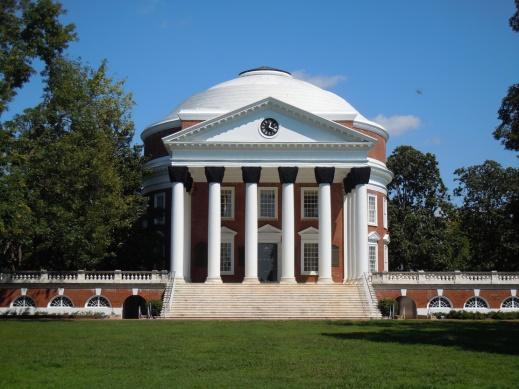
UVa reinstates Early Decision for 2019-20

By:  Nancy Griesemer 

After over a decade in mothballs,  binding early decision has returned to the University of Virginia for 2019-20.
The new old plan offers high school seniors the opportunity to apply to the University by mid-October and receive their admission decision before winter break. Admitted early decision applicants who apply for need-based financial aid and have completed both FAFSA and CSS Profile by November 15 will receive aid awards at the same time they receive their admission offer in December.
Early decision is designed for students who have determined by early fall that UVa is their top choice for college. It is a binding admission plan, meaning those who are admitted are committed to accepting an admission offer to UVa and promise to cancel applications to all other schools.
With the addition of early decision, UVa will offer three application options:
  • Early Decision: applications due by October 15 and students notified by December 15
  • Early Action: applications due by November 1 and students notified by January 31
  • Regular Decision: applications due by January 1 and students notified by April 1
“Early decision is for students who know without a doubt that UVA is their top choice for college,” said Dean of Admission Gregory W. Roberts. “Early action was established in 2011 and is for students who would like to receive an early notification of their admission decision, but want to keep their college options open over the winter.”
According to a press release, Roberts indicated that “all applicants will be evaluated in the same manner regardless of which plan they choose,” and he promises that no advantage or disadvantage will be given in the process based on which plan the applicant selects.
“Our mission is unchanged,” Roberts said. “We are committed to identifying and recruiting talented, interesting, ethical students from diverse backgrounds, high schools and communities who will both benefit from their experience at UVA and make our community, and the world, better.”
UVa began non-binding early action in fall 2011, after eliminating an older early decision option in 2007. At the time, Virginia stood alone with Harvard and Princeton supporting policies condemning all forms of early admission as disadvantaging low-income students. Although deans from the three schools have since traveled together as part of a fall tour promoting greater accessibility in admissions, they all eventually backed down from their positions and reinstated various forms of early admission. But only Virginia has gone back to early decision.
Possibly a desire to spread the huge administrative crush of applications now routinely coming in early and a wish to improve yield (the percent of students accepting an offer of admission) figured into the decision to add early decision as an option. But the fact remains that UVa is the only college in the country that has opted for an October 15 early decision deadline—the earliest permissible under NACAC’s Statement of Principles of Good Practice (SPGP).
Associate Dean of Admission Jeannine Lalonde explained, “…we will release the results of the Early Decision review in December. We haven’t been able to do that in about a decade. The applications are a bit higher than back then, so the deadline for the first group is moving up to October 15.”
UVa joins a number of other public institutions squeezing the application process by moving application deadlines up to October 15, such as Georgia Tech and the University of North Carolina. No doubt school counselors with start dates after Labor Day will feel the pressure placed on them by the new UVa early decision option to get recommendations and transcripts out by a deadline set a few weeks into the school year.
And note that the University of Virginia will only be accepting the Common Application this year, which doesn’t go live until August 1, 2019.

Monday, May 6, 2019

The Common Application announces new members for 2019-2020

By: Nancy Griesemer


The Common Application recently announced the addition of 50 new members to a roster of what will be almost 875 colleges and universities accepting the Common App for 2019-2020. The popular online platform and college planning website annually serves and supports over three million students, teachers and counselors in the U.S. and around the world. And with the addition of several large public institutions including the University of South Carolina, the University of Arkansas, Florida Atlantic University and Florida Gulf Coast University well as Elon University, Duquesne University and Landmark College, these numbers are bound to increase significantly.

“Our increasingly diverse member institutions, now located in all 50 United States, have demonstrated a shared commitment to pursuing access, equity, and integrity in the college admission process. Thanks to our members, all students, regardless of their background, have the opportunity to easily apply to the college or university that will help them achieve their best future,” said Jenny Rickard, President and CEO of The Common Application. “These colleges and universities are helping us forge a direct and unambiguous path to a viable future for all students, and we are elated and honored to welcome them into our membership.”

Membership in The Common Application is open to colleges sharing the organization’s mission of advancing college access and must be
  • Not-for-profit
  • Undergraduate degree-granting
  • Accredited by a regional accrediting association (if inside the U.S.)
  • A member of the Council of International Schools (if outside the U.S.)
  • Committed to the pursuit of equity and integrity in the college admission process
Member institutions are no longer required to also be members of the National Association for College Admission Counseling (NACAC). The requirement to evaluate students using a “holistic” selection process including a recommendation and an untimed writing sample (essay) was also dropped to accommodate a wider variety of member institutions.

As a result, the Common App membership includes
  • Colleges from 50 states plus Washington, DC
  • 370+ colleges with no application fee
  • 170+ public universities
  • Over 330 colleges not requiring a personal statement
  • 64 international universities
  • 340+ test-optional/test-flexible institutions (including colleges that only “sometimes” require tests)
But the Common App isn’t the only online application from which students can choose. This year, the Coalition Application was accepted by over 140 colleges and universities, including four exclusives: Virginia Tech and the Universities of Florida, Maryland and Washington. The Universal College Application (UCA) was welcomed by 18 institutions including Harvard University, Johns Hopkins, Cornell University, and Princeton. The Common Black College Application enabled students to apply to any number or combination of 53 HBCUs for a single low fee. The Cappex Application, with its promise of no application fees and no supplemental essays, was accepted by over 125 institutions including Cornell College, Eckerd College, Ohio Wesleyan, Queens University of Charlotte, and the University of Tampa. The Greenlight Scholars Application was accepted by 30 colleges and universities, including Carleton College, the College of Wooster and the Wentworth Institute of Technology. The QuestBridge National College Match application was welcomed by 40 highly selective colleges and universities.

And the following new member colleges and universities will be offering the Common Application for 2019-2020:

  • Arkansas State University (AR)
  • Baruch College, The City University of New York (NY)
  • Bridgewater College (VA)
  • Brooklyn College, The City University of New York (NY)
  • College of Staten Island, The City University of New York (NY)
  • Duquesne University (PA)
  • Elon University (NC)
  • Florida Atlantic University (FL)
  • Florida Gulf Coast University (FL)
  • Hunter College, The City University of New York (NY)
  • Kansas State University (KS)
  • Landmark College (VT)
  • Messiah College (PA)
  • Methodist College of UnityPoint Health (IL)
  • Midway University (KY)
  • Missouri Southern State University (MO)
  • Missouri State University (MO)
  • Mount Aloysius College (PA)
  • North Central College (IL)
  • Pennsylvania College of Technology (PA)
  • Dominican University (IL)
  • Eastrn Michigan University (MI)
  • Ryerson University (Ontario, Canada)
  • Shawnee State University (OH)
  • Simpson University (CA)
  • University of Arkansas (AR)
  • University of Charleston (WV)
  • University of Minnesota Crookston (MN)
  • University of North Dakota (ND)
  • University of South Carolina (SC)
  • University of Texas - Arlington (TX)
  • University of the Incarnate Word (TX)
  • Wichita State University (KS)
  • Wisconsin Lutheran College (WI)